Natasha Dahnberg
Encyclopedia of Lost Libraries
Objects, installation, performance
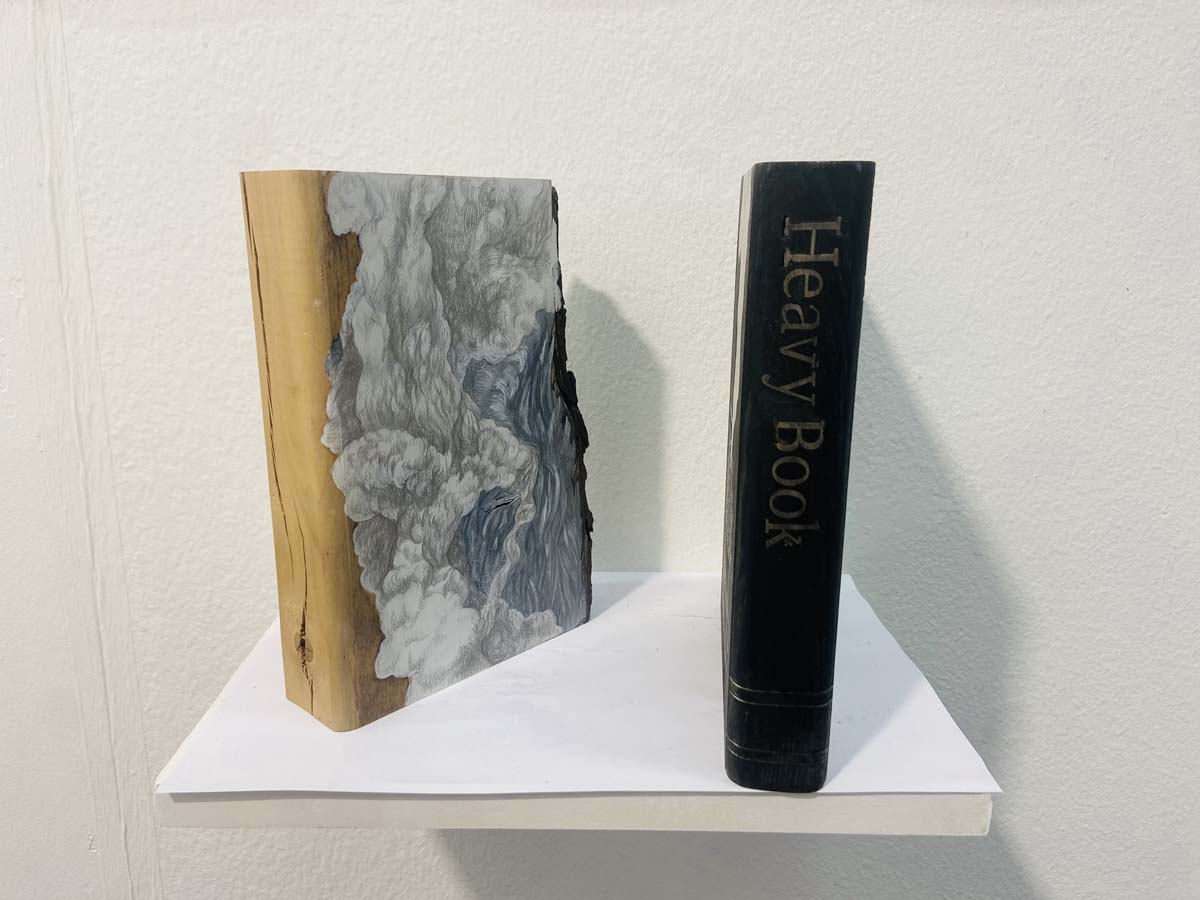
Encyclopaedia of Lost Libraries is an ongoing project examining how memory, knowledge, and cultural infrastructures are affected when libraries, archives, and museums are destroyed during war and political upheaval. The series consists of sculptural objects in oak and ash: solid, closed forms that resemble books but cannot be opened. They allude to the real volumes whose contents have been lost and function as memorials to knowledge erased, traditions broken, and the narratives that violence attempts to control. They may also evoke larger human losses, while the materiality and sealed form articulate both the fragility and the resilience of memory.
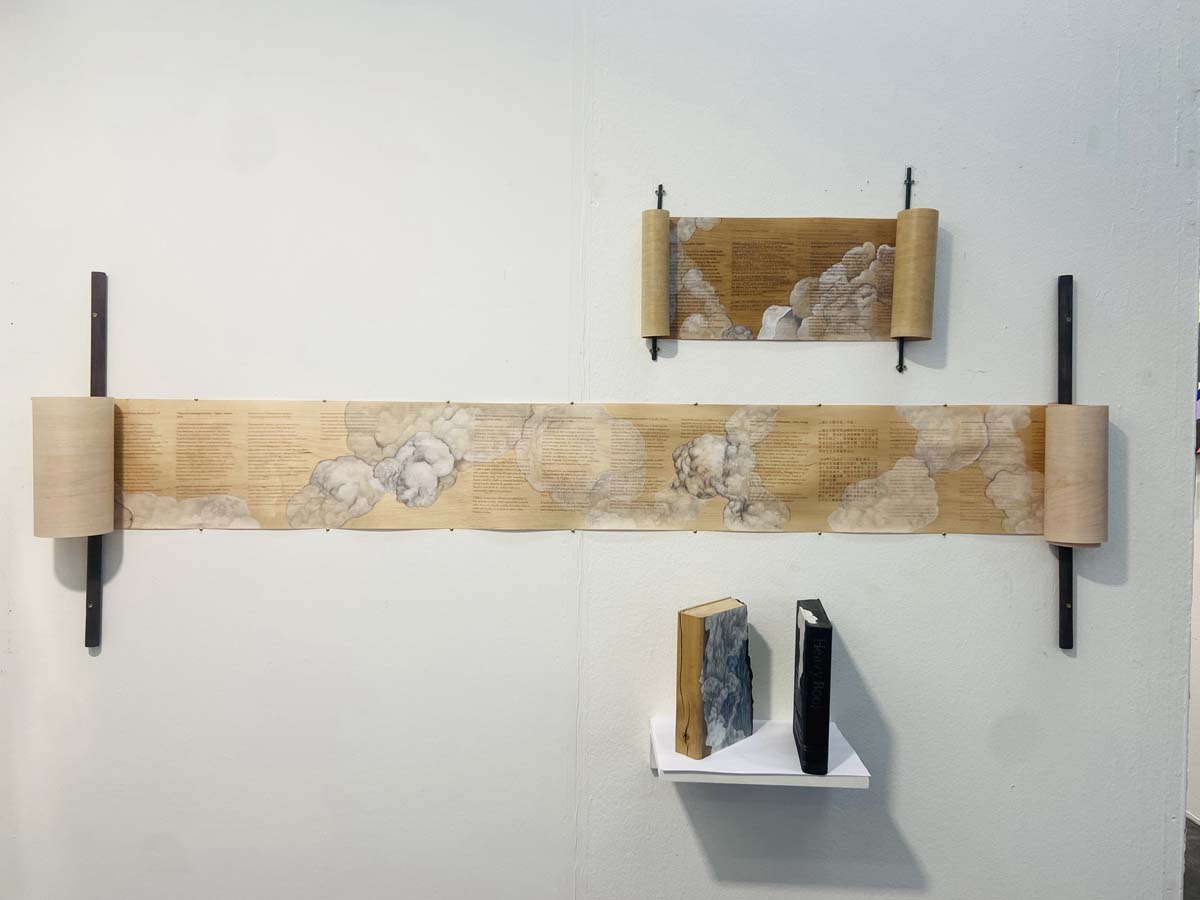
On the front of each object, clouds of smoke are drawn in silverpoint — a medieval and Renaissance technique whose oxidising lines deepen slowly over time. On the reverse, short texts describe the libraries referenced by the work. Together, the objects form an archive of silence — a reminder of how knowledge is manipulated or disappears when its material foundation is destroyed.
The books included in the project bear the title THE HEAVY BOOK on their spines, a phrase that operates both literally — the carved wooden objects weigh considerably more than paper books — and metaphorically, since the narratives they carry, of war and destruction, are equally heavy. Some volumes have silver inlays, developed in collaboration with silversmith Ekaterina Sisfontes. Both the materials and the craftsmanship mark the works as rare and precious, underscoring the intangible weight and significance of the book.
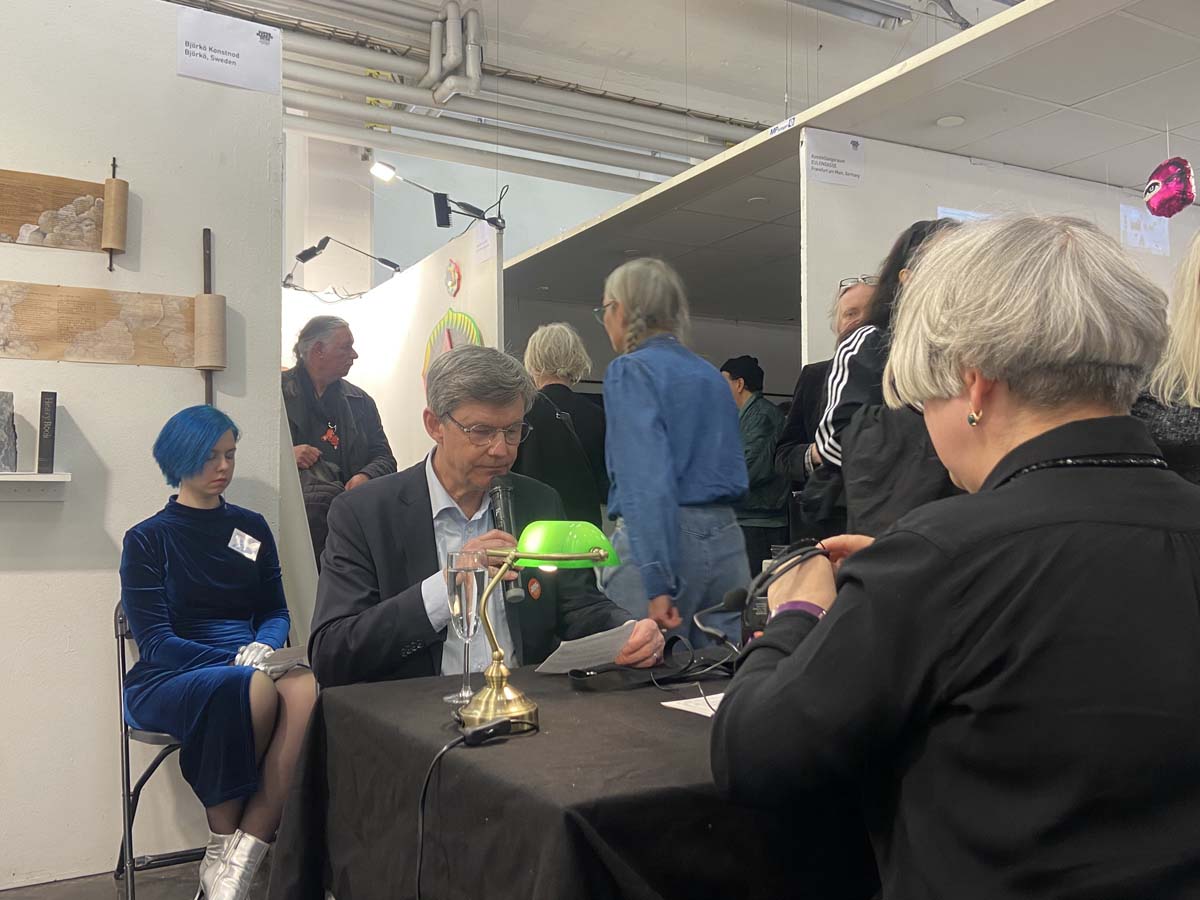
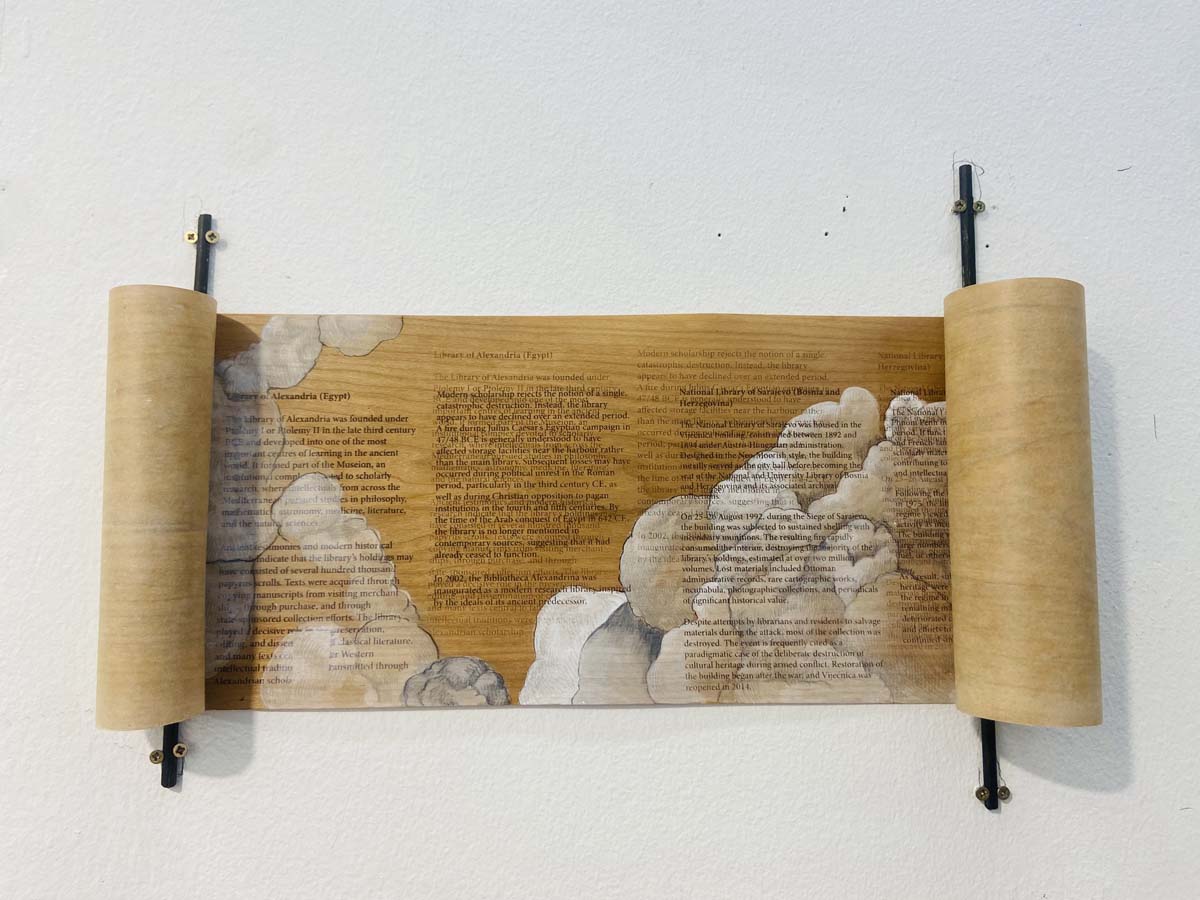
In a participatory performative reading, memory takes shape through the voice. From scrolls unfold fragments of encyclopedic entries about libraries and archives that have been deliberately destroyed during wars and revolutions—places where knowledge, culture, and ideology were once gathered. The scroll itself is also an art object: made of veneer and covered with silverpoint drawings. The texts move between languages and voices as the audience is invited to continue reading in the languages they carry with them. The performance becomes a temporary archive where what someone once tried to erase is recalled through the collective act of reading.
www.dahnberg.comSoviet-born artist, born in Moscow in 1969, based in Sweden since 2000. Her practice spans visual art and curatorial work, including roles at Köttinspektionen in Uppsala and Uppsala Art Museum. Working across verbal and visual languages, she engages processes of cultural translation, employing symbols and materials to navigate the space between personal history and contemporary Swedish context. Recurring themes of loss and resilience inform a body of work that bridges displacement and belonging.